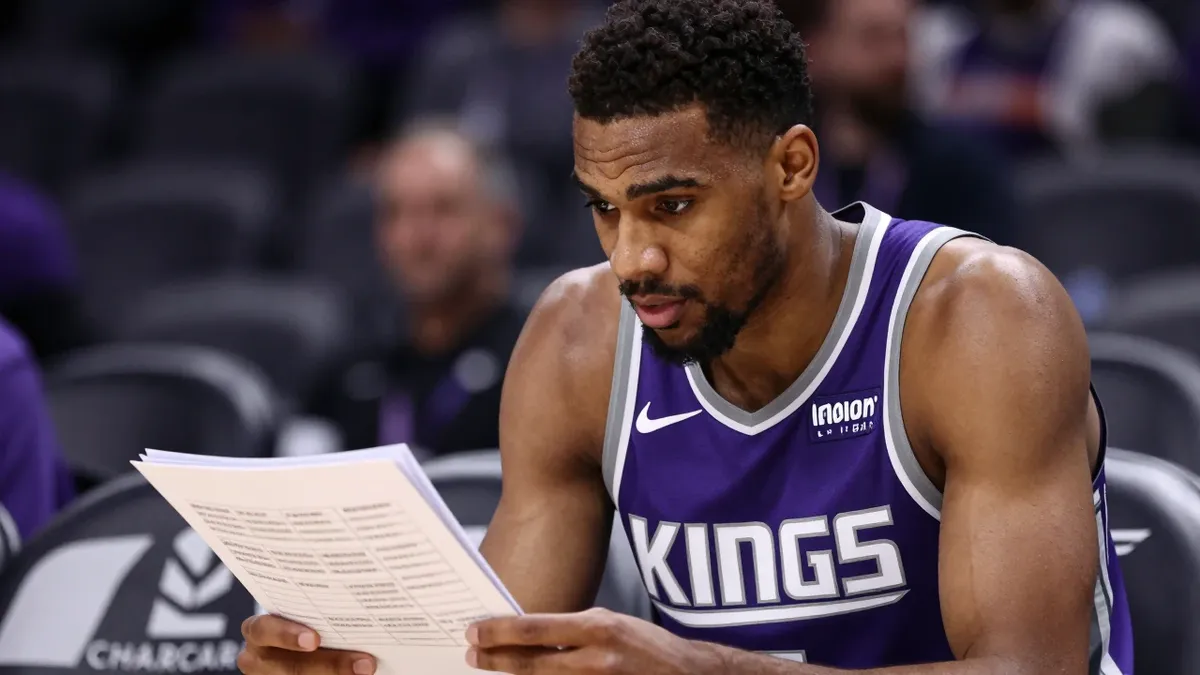
The Sacramento Kings' signing of Ben Simmons has directly increased the trade value of forward De'Andre Hunter. Hunter, entering the final year of a $24.9 million contract, becomes a more expendable and valuable asset for Sacramento as they prepare for the 2026-27 NBA season.
General Manager Scott Perry faces a complex offseason. He must integrate rookie Darius Acuff Jr., manage the futures of veterans Domantas Sabonis, Zach LaVine, and Malik Monk, and now oversee Simmons's return to the NBA. Hunter's situation sits at the center of these moving parts. His skill set is exactly what the Kings have sought, but that also makes him their best trade chip.
Why is De'Andre Hunter so valuable?
Hunter is a true three-and-D wing. He can defend multiple positions, shoot from the perimeter, and fit into starting lineups or come off the bench. This archetype is highly coveted across the league. Acquired at last season's trade deadline for Keon Ellis and Dennis Schröder, Hunter immediately addressed a long-term need for Sacramento.
Scott Perry has been publicly non-committal about Hunter's future. That strategic ambiguity makes sense given the many directions this season could take. On one hand, losing a player of Hunter's caliber hurts a team's defensive identity. On the other, his contract and proven role make him an ideal piece for a major trade. You can review the full Kings roster to see how he fits.
How does Ben Simmons change the equation?
Simmons's arrival creates redundancy and opportunity. While he's a different player, his ability to handle the ball, defend, and play multiple frontcourt positions overlaps with some of Hunter's utility. More importantly, Simmons's signing signals a shift in roster construction, freeing the Kings to use Hunter's value elsewhere.
If Hunter hits the trade market, he becomes the easiest major asset for other teams to acquire. His expiring deal is manageable, and his game is a known quantity. Contenders looking for a final piece or teams aiming to get younger could see Hunter as a perfect target. This wasn't as clear before Simmons joined the roster.
What's next for the Sacramento Kings?
The Kings enter training camp with significant questions. Integrating Acuff Jr. is a priority, while the veteran trio of Sabonis, LaVine, and Monk each have uncertain contract situations. Simmons's attempt to revive his career adds another layer of narrative. Hunter's expiring deal gives Perry flexibility, but it also creates a deadline.
Perry could choose to extend Hunter, valuing continuity and his specific skills. The more likely path seems to be exploring the trade market before the deadline, using Hunter to address other roster needs or acquire future draft capital. Monitoring the league standings will be key as the season progresses.
The Kings have turned a good player into a great asset. Hunter's future in Sacramento was always uncertain on an expiring deal. Simmons's signing simply turned the volume up on that conversation. Every game, especially as the trade deadline approaches, will be an audition for Hunter's next team or a case for him to stay. The front office's decision will shape their trajectory for years.